By Katie Cole · BDA Magazine 2016 Annual, pp. 22-23
↓ Readable PDF↓ Original pages (scan)
Katie Cole’s end-of-season checklist for laying up a Dragon. Start with a thorough freshwater wash of cleats, cars, blocks, hatches, bilges and spars, and clean the electric pump. Then check the trailer (tyres lose about 10 psi over a season), the hull, every block and sheave (lubricated with McLube or Holt Prolube, not oil), runners, tiller extension joint, furling line, mast-step pin, battery and pump connections. On the spars she lists the usual failure points – rigging end fittings, the halyard locking ball, corrosion at the lower rivet hole, cracking at the mast ram fitting and debris in the mast foot – and recommends replacing an internal forestay every 2 years.
Owning and maintaining a Dragon can be expensive. Obviously nothing prepares your boat for the season ahead like a service from a professional but if you follow some simple rules you could save yourself a lot of money and aggravation, not to mention those untimely breakages during the season.
Before you finish sailing for the season try to make a list of anything that is not quite right, that way you will remember they need doing or to tell your professional.
The freshwater wash
Salt is a killer for your equipment, a good soaking with freshwater will make a huge difference to the working and longevity of your kit. A pressure washer is a great thing; it will remove a lot of imbedded grime but do be careful on your teak as you can do a lot of damage if you get too close.
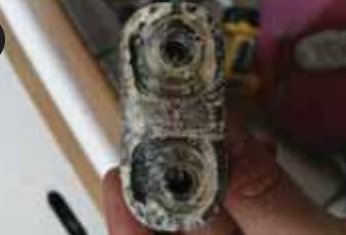
Don’t be afraid to use soap – a hot soapy wash is a bonus if you don’t mind getting stuck in. Using a soft bristle brush around all those fittings on the mast step and traveller beam will work a treat. Once you have done an initial wash and given all your blocks and ropes a good soaking you can now get busy with a good old fashioned hose pipe. There really is no substitute for holding a hose on all your cleats, cars (especially the mainsheet car) and blocks whist you run ropes round blocks, move cars back and forth and move cleat jaws open and closed to really flush them through well, you will straight away start to feel them moving easier. The salt and silt builds up in the voids of cleats (see picture 1) and really needs to be flushed out.
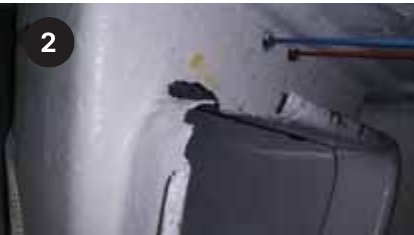
If you have a spinnaker chute you should make sure you give the hatch tracks a good wash too, not forgetting the little sheaves that sit under the hatch that the rope runs round. Also check for any holes in the material chute and get them repaired if possible, they will only get bigger and jam up the spinnaker when dropping! While you have your head in there check all around the grp part of the chute as any damage here will damage your spinnaker, tape is not a sufficient repair here, it should be repaired properly. (see picture 2)
Open the hatches! Yes, there is something beyond that hatch that has been getting salty and sweating all season. Do it all a favour and give it a wash, even if you can’t bring yourself to climb inside with a bucket and soapy sponge, at least make an effort to squirt a hose or pressure washer up there. Some hatch clips can be troublesome, giving them lots of water will help. Again, open and close them whist holding the hose on and you will have much more effect. Leave the hatches off and it can all dry out over the winter.
Having done all of this it is a good time to clean the electric pump. Remove the pump from the housing and clean all debris from around the impeller shaft. While you are down there do your best to remove any rubbish from the bilges – you will be surprised what you will find – sunglasses, that penknife that ‘disappeared’, money, bottletops, cable ties….. Now you can put some nice clean water down there and use both the electric pump and manual pump which will flush them through. This will also alert you if there is a problem with any of the pumps and you can sort it out before you put the boat to bed for the winter.
Your spars get the hardest time with the salt. The aluminium, salt and stainless together will do their best to ruin them. Wash them all down with plenty of fresh water from a hose, a pressure washer just won’t get into the fittings where you need it. Also flush the boom through on the inside and leave it on its end to drain.
I must emphasize you cannot spend too long washing your boat, it will give you payback in the long run. This doesn’t have to be just a winter job, any time you get throughout the season you should give it a thorough wash. If mine lived in a marina and not on a mooring she would get washed after every race, as it is it gets done once a month when she comes ashore.
Things to check
Trailer
The trailer is an important piece of equipment and is often overlooked, but we do want the boat to make it to storage safely. At the very least have a quick look at the tyres and make sure they are not perished and that there are no cuts in the side walls. Check the pressures as they will have lost about 10psi over a season! It is well worth thinking about getting a trailer service, particularly if the brakes have not been looked at for a while and especially if you travel.
The Hull
To keep her looking good get any damage repaired, all those little chips and scuffs are easier and cheaper to keep on top of if you deal with them regularly. Any smooth gelcoat surfaces should be given a polish and finished with a coat of wax to help protect against UV. It goes without saying that any damage you get to the underwater surfaces should be dealt with sooner rather than later, especially if it goes beyond the gelcoat as water will travel through glass (or between the glass and the keel) and make a much bigger job of the repair when it eventually is done.
Inside the Boat
Check and lubricate all blocks, cleats and sheaves, not forgetting the hatch track and sheaves mentioned earlier. Yes there are blocks beyond the hatches and it will be worth you going into the darkness to do the same to them. At this point I should mention that you should avoid using oil based products as the oil will catch the salt and make a grinding paste and eventually clog up the ball bearings. I would recommend McLube or Holt Prolube for this. Carry a cloth with you whilst doing this to wipe off any excess, otherwise you can end up with a white residue which will be hard to remove later.
Let off all systems with shockcord takeaways to ‘relax’ the shockcord.
Replace any ropes, blocks or shockcords that are worn out. Especially check the runners/backstay and their blocks up in the back tank and again where they come through the bulkhead – most important with wire runners as they give the blocks a hard time.
Something that is easy to miss is the tiller extension joint, lift the extension all the way forwards and check the rubber joint for splits, replace if necessary.
If you have a continuous furling line it will most likely need replacing. They shrink over the season and generally do 1.5 seasons before the crew start complaining about skinning their knuckles and the skipper complaining about how slow the furl is!
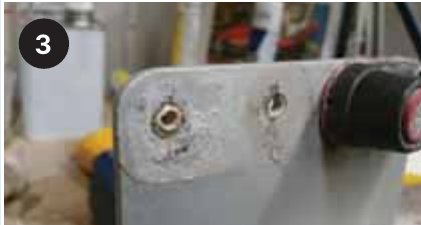
Any cleats on aluminium plates such as under the cuddy have a habit of collecting salt between the cleat and the aluminium (see picture 3). This ‘grows’ over time and will eventually stop the cleat from working. The same goes for the ratchet block on the winchless system. If the block does not run freely there will probably be a large amount of corrosion under the rubber and you need to get it cleaned up.
Check all rings, pins and shackles. Also check the mast ram area on the front of the cuddy, it is not uncommon for the stainless steel fitting to split.
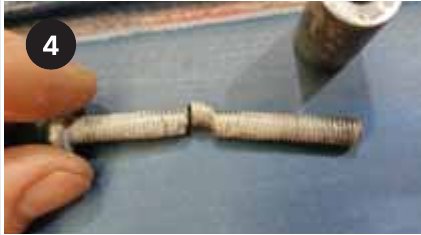
If your mast sits on a single pin on the mast step you should remove the bolt and check it for signs of weakness. (See picture 4). Replace if necessary.
Check all of the connections on the electric pump and battery, any green on plugs is a warning sign and you should replace them. If it is possible you should take your battery home, charge it and keep it in the warm and dry through the cold months. If your battery case lends itself you should open the lid when charging to prevent condensation.
Spars
After washing and leaving to dry, all moving parts should be lubricated with McLube or Holt Prolube as mentioned above. You can buy a special product to wipe onto the mast called ‘Mast Care’, that puts a protective coating on the outside of the mast, which is a good thing to do, especially before it gets stored for the winter months.
Mast
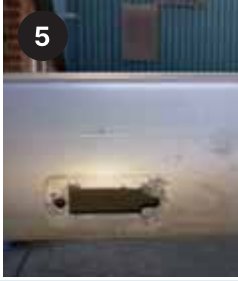
Check for any loose fittings and refasten if necessary. Check all halyards and rigging for signs of damage or stress. A common place for rigging to fail is around the end fittings, check this closely. Some insurance companies request that your standing rigging should be changed every 5 years – check your documents. Also have a good look at the wire around the main halyard locking ball, if there are broken wires you should get the halyard shortened with a new ball or replace it. If you have a lead block for the spinnaker halyard up the top check this for wear and tightness. On the other end of the spinnaker halyard where it exits the mast at the bottom it is not uncommon for the mast to corrode especially around the lower rivet hole. This will result in the sheave pulling out of the mast just when you don’t want it to. (see picture 5)
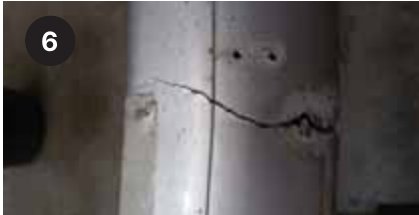
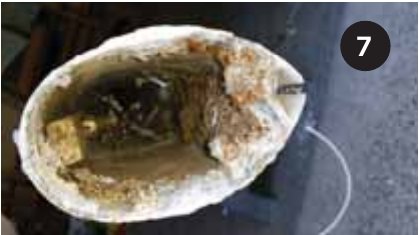
If you have an internal forestay system and you use your boat regularly it is recommended to replace the forestay every 2 years. It tends to be at the top where the forestay exits the tube that is the common problem here. If left until it breaks, you not only risk losing a race or worse, but it can be impossible to get the old wire out of the top bearing resulting in the need to replace the fitting in the mast which is a costly and timely job. Have a good look around the mast ram fitting, mainly checking for any cracking, this is a common place for a dragon mast to break. (see picture 6). You should take the foot off the mast from time to time as well, much debris will collect in here over the season, left to sit there with the damp salty environment it will slowly but surely corrode your mast from the inside until you have no bottom left to your mast. (see picture 7)
When you come to pack your mast away, try to keep all of the rigging off the mast where you can, leaving stainless wires laying against the mast all winter will create a lot of corrosion. If you are lucky enough to have a mast cover you may have an inner sock, that should be put on the mast before anything else, then the rigging can tie to the outside of this, as it is to protect the mast, not to keep it warm! Failing that you can put some clean cloths or towels around the mast to prevent that contact if you want to.
Spinnaker pole
Not much to check here but again have a good look over for any loose fittings, corrosion and replace anything that needs it.
Boom
A good visual check of all fittings, ropes and elastics. Check the outhaul car bracket for looseness on the car. Now turn the boom over, the underside is where most of your problems will come from. The biggest problem you are likely to find here is splitting along the centreline of the boom where the mainsheet and kicker are fitted on.
The above information is a basic guide of some of the things that I look for when servicing a Dragon, but obviously different manufacturers/models will throw up different problems and weaknesses.
Hopefully this article will assist in keeping your Dragon in prime condition and I would like to take this opportunity in wishing you all the best for the festive season and look forward to seeing you on the water in 2017.
Originally published in the BDA Magazine 2016 Annual. © Katie Cole and the British Dragon Association. Reproduced with permission.
← Back to the Technical Library