By Patrick Gifford · BDA Magazine 2015 Annual, p. 22
↓ Readable PDF↓ Original pages (scan)
Patrick Gifford makes the case for the older GRP Dragons built between 1973 and about 2000 (roughly GBR 463 to 650), whose strong scantlings keep them competitive far longer than their falling second-hand prices suggest. Using the 1986 Borresen Basilisk (GBR 515), which he and Mike Hayles have owned twice, he explains that a boat must have been well built and down to weight when new, and that an up-to-date sail wardrobe is the main cost. He lists the updates made – bulkheads and pumps, a ram, windward genoa sheeting, an electric pump, a GRP bridge deck and modern runners – notes the weight they add, and says similar boats can be bought for £7,000 to £12,000.
Among Dragons, the least loved group of boats is made up of the older GRP boats. By this I mean boats built from 1973 when GRP construction was first allowed up to about 2000, thus excluding boats built in the last fifteen years. In GBR numbers this means boats numbered from about 463 to about 650. They don’t have the interest and attraction of the Classics and they are thought to be uncompetitive with the modern boats. However, the Dragon is a one-design class and the scantlings, derived from the Classics, produce boats with considerable extra strength and stiffness compared to more modern designs specifically intended for GRP construction. This should mean that deterioration in competitiveness is relatively slow and significantly slower than the reduction in cost in the secondhand market.
Mike Hayles and I have now owned the 1986 Borresen Dragon Basilisk, GBR515, twice in her life. We bought her in late 1987 the first time and sold her in early 1997. We then bought her back to be an Aldeburgh-based boat in early 2007 by which time she was already over twenty years old. She has been a success for us both when nearly new and more recently. In the first period, the best result we achieved was a third in the Gold Cup and since 2007 she has won Aldeburgh Week several times and also performed respectably, most recently when third in the Scottish Championship this year, when allowed to leave her comfortable estuary.
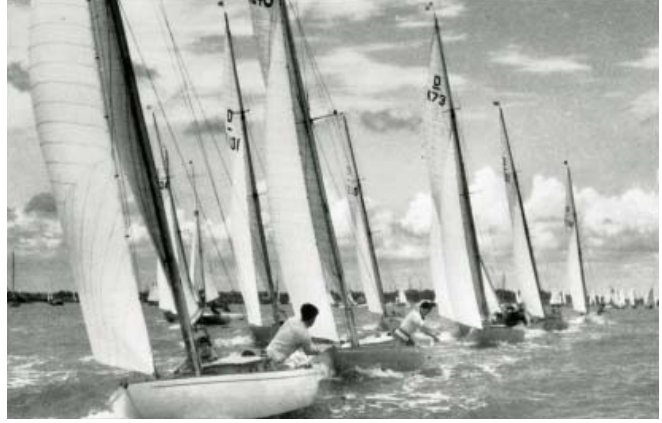
It is interesting to think about what is required to keep such a boat competitive. First, she must have been well built and down to weight when new. Borresen certainly achieved this and Basilisk’s hull shows no sign of age or rust. There are clearly plenty of middle-aged Petticrow boats which are equally sound. At the other end of requirements, it is just as necessary for an older boat to keep its sail wardrobe up to date for important regattas. It may, however, not be so important at Aldeburgh, or other local venues where low cunning can substitute quite well for outright speed. This does in fact represent the major cost.
The interesting area is in the updating. Having sailed Basilisk for so long we do know exactly what has changed over the years. The biggest problem is middle-aged spread. We have added bulkheads (and pumps in them), a ram, windward genoa sheeting and an electric pump, all of which add weight. She has also been painted which makes her look pretty and the bottom has been grit blasted to remove excess antifouling. Otherwise there haven’t been many changes. The genoa roller system is now a cross between the old Borresen system at and below the deck and the more modern system running in the mast at the top. We also bought a Borresen GRP bridge deck and removed the old wooden one. This enabled us to modernize the runner system.
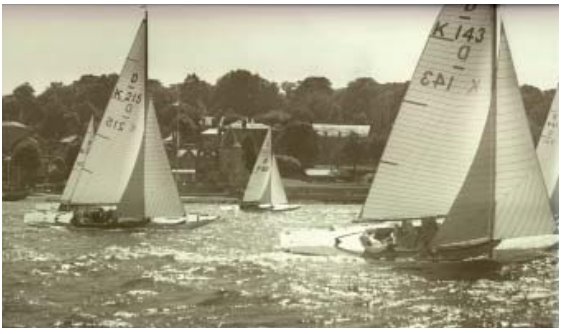
What would we still like to do? The one thing we can’t do which would make a big difference would be to raise the cockpit floor to the height in modern boats. It really does make it so much easier for less athletic middlemen. However, it is a very major job to change the interior moulding and we haven’t any appetite for it. We are toying with moving the shrouds forward to where they were when we first owned her. This would put in more pre-bend which might help us since we tend to sail with weight well below the limit.
The end result is that we have a boat that works well, has always felt as though she wanted to go and is still pretty competitive. The good news for others is that a very quick trawl through the For Sale lists of various Dragon Associations reveals plenty of similar boats capable of doing the same at prices between £7,000 and £12,000. They should mostly be able to do what we have done provided there hasn’t been serious neglect at any point.
Originally published in the BDA Magazine 2015 Annual. © Patrick Gifford and the British Dragon Association. Reproduced with permission.
← Back to the Technical Library