By Simon Holt · BDA Magazine 1998 Summer, pp. 9-10
↓ Readable PDF↓ Original pages (scan)
Simon Holt describes the shroud system fitted to the classic Dragon Lis (GBR 403), based on a design by rigger Phil Evans and widely used in the Windermere class. Instead of loading the old chain plates, the shrouds pass through slots in the deck to a stainless steel tube under the deck, held by compression struts (anything from stainless steel to 4x4 timber), and then down to bottle screws on stainless wings on an enlarged mast step. On Lis the tubes were increased from about two to five inches in diameter and filled with wood. The result lets the rig be tensioned much harder, allows the mast to move fore and aft for ram and pre-bend, and makes stepping and tuning easier.
Simon Holt starts with Mast Rigging.
The system described below is installed on Lis GBR 403; it is based on a design by a professional rigger, Phil Evans, who is also the world champion Flying Fifteen crew. It is used extensively on the Windermere Class, which, although smaller in length, has a bigger rig. The photographs on this page are of the Windermere class rig and the one on the following page is of the Dragon.
The aim is to take the stress away from the old chain plates and for compression struts to take the strain of much greater loads imposed by tightening up the shrouds.
Step One
Cut a slot in the deck to enable the shrouds to pass through and which will allow fore and aft movement for the mast to move with the ram. The slot should be positioned so the shrouds pass through centrally and over the back (hull side) of a stainless steel tube. On some Dragons there will have to be two slots, on both sides, because a deck beam passes across the boat at this point. Obviously do precisely the same on both port and starboard sides of the boat. A slotted rubber cap is fitted over the shrouds at deck level to make them watertight.
Step Two
The stainless steel tube is positioned under the deck (as shown in photo 1). It is incorporated in the compression struts which support the deck and hull both fore and aft the mast.
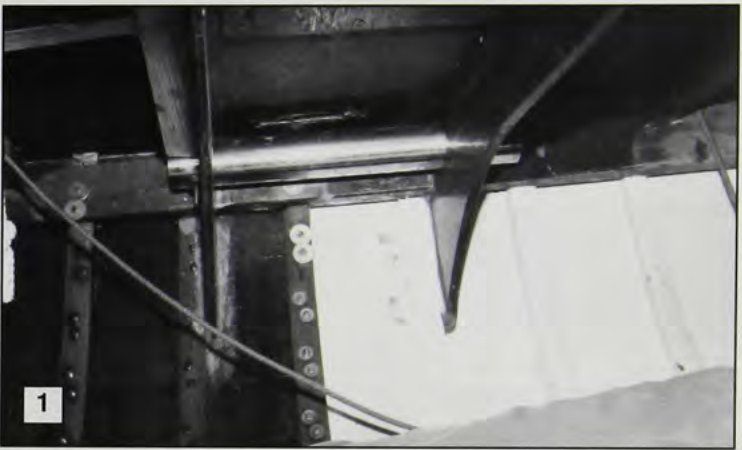
A sophisticated system might have the compression struts fashioned in stainless steel, but they can be as crude as 4×4 timber. On the back of the tube (which is pinned to prevent it rotating, see photo 2) are drilled in nuts which retain the extremes of the forward and aft movement of the shrouds along the tubes. These are for positioning and aligning the shrouds, and allow for adjustment of the rig.
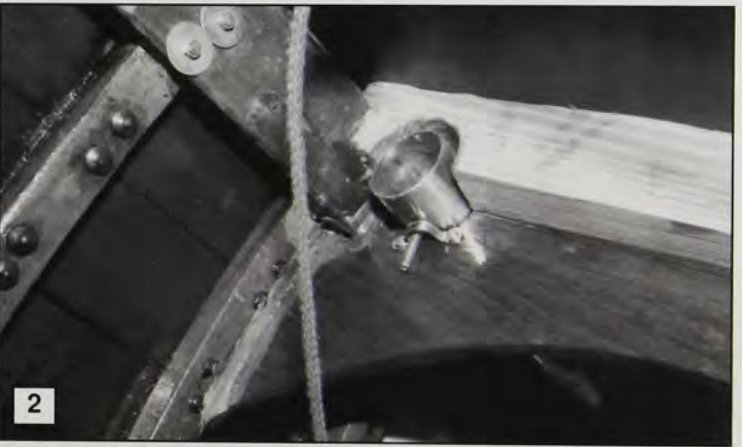
On both rigs shown, the tube is prevented from rotating, but I can see that there might be benefits from allowing it to rotate to ease the friction caused when tightening the rigging.
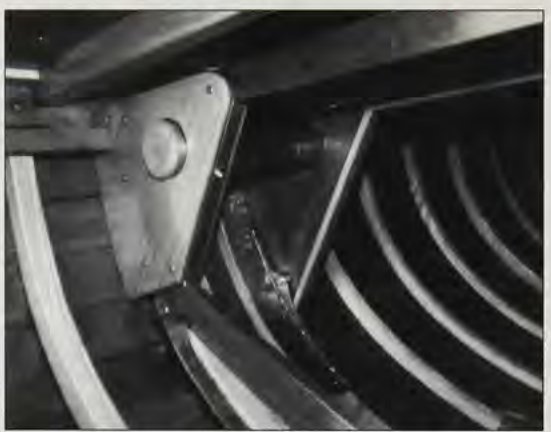
Considerable pressure can be applied, and whereas on the Windermere Class the tubes are about two inches in diameter, on Lis they have been increased to five inches, and filled with wood (photo right) to prevent the risk of folding or grooving them.
Step Three
Manufacture a larger mast step with stainless steel wings (as in photo 3 on previous page). These again can have a series of holes for alignment and adjustment of the two bottle screws which are fitted to the wings. The wings ‘point to’ the underside of the tube and align to accept the shrouds.
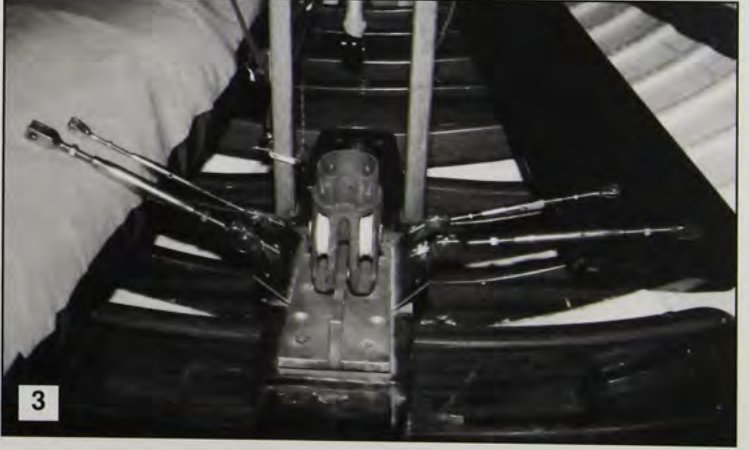
There are more modern versions of shroud locks which are easier to adjust than the traditional bottle screws. You will need longer than usual shrouds, but their measurement does not have to be precise because the bottle screws allow for fine adjustment and, of course, the tensioning.
Step Four
The combination of the compression struts and more secure fastening of the shrouds via the tube to the hog means you can strengthen the rig substantially without the danger of pulling out the chain plates. The rig can also move fore and aft so you can ram and pre-bend with either a sophisticated ram or a simple block and pulley cascade system, tied round the mast just under the deck and led to the underside of your jam cleat shelf. The mast is also stepped more easily, and the tuning is simpler and more comfortable to carry out.
Originally published in the BDA Magazine 1998 Summer. © Simon Holt and the British Dragon Association. Reproduced with permission.
← Back to the Technical Library