By David Dellenbaugh · BDA Magazine 2007 Annual, pp. 14-15
↓ Readable PDF↓ Original pages (scan)
What to do differently upwind when you know the wind will shift persistently in one direction, rather than oscillate (the default when the pattern is unknown). Dellenbaugh’s ingredients are: head for the shift, sail fast to the next shift, fight to go the right way, watch out for the layline, and use other boats to read the wind. He then lists oscillating-breeze rules to forget in a persistent shift: staying in the middle, tacking on headers, sailing the longer tack first and not letting boats cross you. Diagrams show boats A–D heading for the favoured side, when to “bite the bullet” and pass behind a boat, and why to foot rather than pinch toward the shift.
There are three basic types of windshift patterns that you may encounter on the race course: oscillating, persistent or unknown. When the wind direction is shifting back and forth, you should follow all the oscillating strategies that were described in the last issue.
When you’re not sure what the wind will do, you should also use those oscillating strategies. There are two reasons for this: First, it’s more common to have oscillating shifts, so this should be your ‘default’ pattern unless you find otherwise. And second, when you don’t have a great feel for the wind pattern you should be a little more conservative; that’s what oscillating strategies tend to be.
However, when you know the wind will shift primarily in one direction during the race (or during the next windward leg), you need a different approach. Here are some critical ingredients of a strategy for playing persistent shifts.
Head for the shift.
Some elements of your strategic plan are the same for both oscillating and persistent windshifts. The primary rule of thumb is that you should always sail toward the next shift you expect. In an oscillating breeze, the next shift comes from different directions. But in a persistent breeze, it always comes from the same place, so you end up sailing toward that side of the course.
Sail fast to the next shift.
This is also a common strategy in any kind of breeze. When you know you are sailing toward a header, you should sail slightly lower and faster than normal. This will get you to the next shift sooner and maximize your VMG in the direction of the new wind (for much more on this, see pages 12-13).
I. Head for the favored side
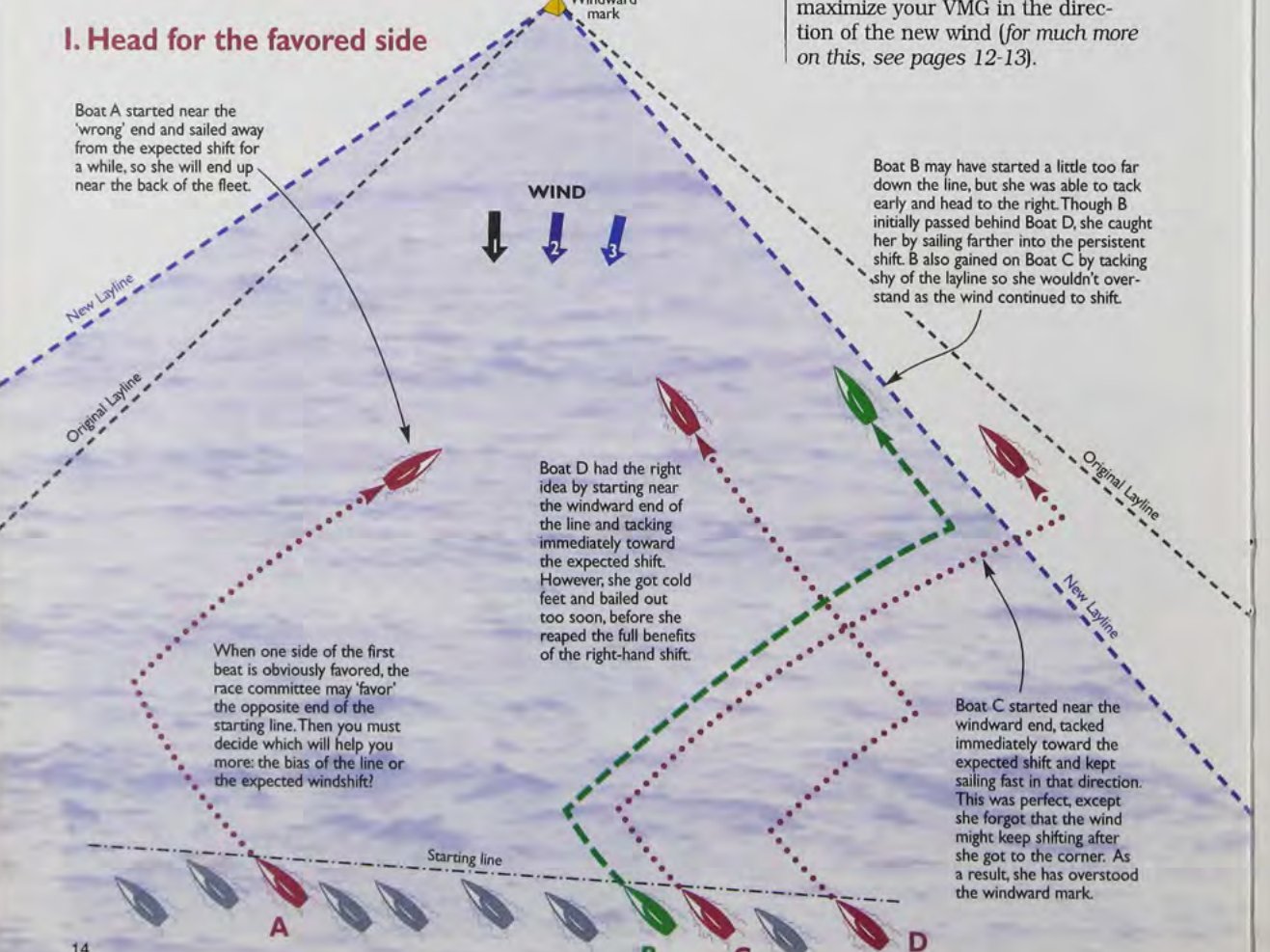
- Boat A started near the ‘wrong’ end and sailed away from the expected shift for a while, so she will end up near the back of the fleet.
- Boat B may have started a little too far down the line, but she was able to tack early and head to the right. Though B initially passed behind Boat D, she caught her by sailing farther into the persistent shift. B also gained on Boat C by tacking shy of the layline so she wouldn’t overstand as the wind continued to shift.
- Boat C started near the windward end, tacked immediately toward the expected shift and kept sailing fast in that direction. This was perfect, except she forgot that the wind might keep shifting after she got to the corner. As a result, she has overstood the windward mark.
- Boat D had the right idea by starting near the windward end of the line and tacking immediately toward the expected shift. However, she got cold feet and bailed out too soon, before she reaped the full benefits of the right-hand shift.
- When one side of the first beat is obviously favored, the race committee may ‘favor’ the opposite end of the starting line. Then you must decide which will help you more: the bias of the line or the expected windshift?
Fight to go the right way.
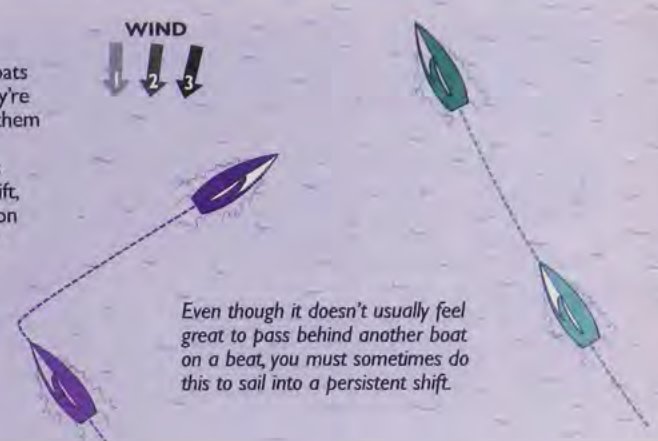
When the wind is shifting persistently, there is only one way to go on the race course, so you must sail that way at almost any cost. After the start, work hard to get a lane of clear air going to the favored side. If there’s a boat in front of you, try footing off below them instead of pinching to stay above them (see Diagram III). When it’s windy enough that wind shadows won’t hurt you too much, it may even be faster to sail the right way in bad air than to tack and go the wrong way to clear your air.
If you are sailing on port tack toward the right side of the course, don’t let a starboard tacker force you to go the wrong way. Instead, maintain a good lookout and plan ahead so you can duck a starboard tacker and keep going right.
Watch out for the layline.
It’s fine to head for the corner in a persistent shift, but you must be careful of the layline. It’s usually better to tack slightly before you reach it. Since you are often far from the windward mark, there’s a good chance that the wind will shift farther before you get there. By tacking early, you avoid overstanding (which can be costly) and also reduce the chance that other boats will tack on you and give you bad air all the way to the mark.
Keep your head out of the boat.
When the wind is oscillating, you have to sail your own race. It doesn’t usually work to chase the puffs and lifts that you can see on other boats. In a persistent shift, however, you should definitely use other boats to help you figure out what the wind is doing. Watch the boats on each side of the course, especially right after the start when you still have the option to go either way. And whenever you cross tacks with another boat, look to see who gained and by how much. This is often your earliest indication about which side of the course is better.
Forget these principles.
When the wind is oscillating in direction, there are certain rules of thumb that almost always seem to work. But these don’t necessarily help when the wind is shifting persistently. In fact, many of these become ‘losing’ strategies. Here are some principles you should forget about when you know the wind is shifting in one direction:
- Stay near the middle – No! In a persistent shift, you should head for a side of the course. If you stay in the middle you will lose ground to every boat that goes farther to the favored side than you do.
- Tack on a header – No! If you start to get headed it means you are sailing toward the persistent shift, so you shouldn’t tack. When the wind is oscillating, it’s good to tack on a header so you can sail toward the next shift. But in a persistent shift, you will get to the next shift faster if you continue sailing into the header.
- Sail the longer tack first – No! When the wind is shifting persistently, you normally want to sail the shorter tack first because that will take you into the persistent shift. Once you get close to the layline, sail the longer tack. This is quite different from the strategy you should follow when the wind pattern is oscillating or unknown.
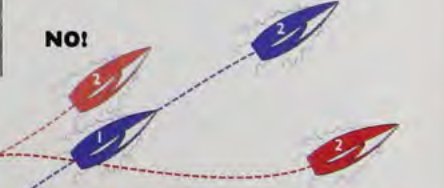
- Don’t let other boats cross you – No! This is a good rule of thumb for an oscillating breeze because when other boats are crossing you they are probably on a lift (see above). But in a persistent shift, you want to sail farther into that shift, so cross behind the other boat (unless they are on or near the layline). “Cross other boats when you can” is another principle that doesn’t work.
II. Be willing to “bite the bullet”
In an oscillating breeze, you don’t usually want to let other boats cross ahead of you. If they are crossing, it probably means they’re on a lift. Therefore, you should tack ahead and to leeward of them so you sail on the lift and beat them to the next shift.
When the wind is shifting persistently, however, throw this rule of thumb out the window. If a boat is crossing you on a lift, it means you are heading toward the persistent shift. So stay on your tack, pass behind the other boat and keep sailing farther into that shift. An obvious exception is when the boat that’s crossing you is on or near the layline; in that case you should probably tack to leeward and ahead of them.
For many racing sailors, it’s difficult to pass behind another boat on a beat because this is an admission that the other boat is ahead of you at that point in time. But in a persistent breeze you just have to “bite the bullet.” Accept the fact that you’re behind and do your best to catch up.
III. Foot toward the shift
Originally published as “Strategy – Upwind strategies for persistent shifts” in the BDA Magazine 2007 Annual. © David Dellenbaugh / Speed & Smarts, reproduced in Dragon News by permission. Reproduced with permission.
← Back to the Technical Library