By David Dellenbaugh · BDA Magazine 2005 Annual, pp. 18-19
↓ Readable PDF↓ Original pages (scan)
Four strategic rules of thumb for downwind legs when you are not sure which side of the run is favoured: sail the longer jibe first, sail for velocity before shifts, sail away from the next shift, and jibe on the lifts. Dellenbaugh explains which of these mirror upwind strategy and which are the opposite of what you would do on a beat. A sidebar shows why it is easy to overstand the leeward mark: jibing angles can be as narrow as 20° to 30°, and an increase from six to eight knots lets a boat sail much lower.
Not even the best sailors know which way to go on every downwind leg. When you’re in the “same boat” and you aren’t sure which side of the run is favored, it’s helpful to have a few basic strategic principles that you can fall back on to keep yourself in the race. Here are four good rules of thumb that will work in almost any situation. Some of these are very similar to the strategies we have discussed for upwind legs. Others, however, are mirror images of what you would do on a beat!
1. Sail the longer jibe first.
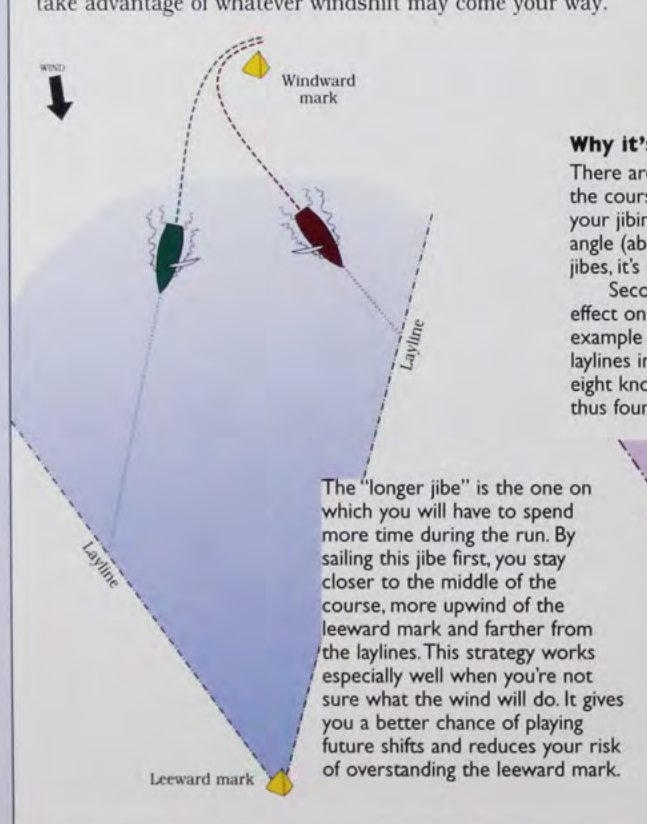
This rule of thumb is a great percentage move on beats, and it works well on runs, too, because it keeps you away from the laylines (below). Once you get to a layline you’re at a strategic dead end; by staying closer to the middle you have a better chance to take advantage of whatever windshift may come your way.
Why it’s easy to overstand the leeward mark
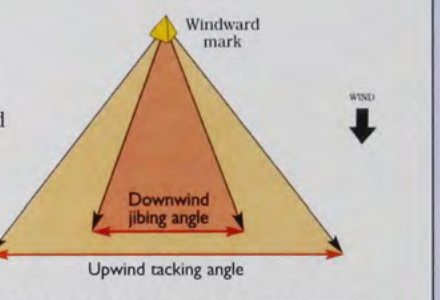
There are two reasons why getting too far to the sides of the course is even more risky on a run than a beat. First, your jibing angle is usually much narrower than your tacking angle (above). When you have as few as 20° or 30° between jibes, it’s easy to sail past the layline to the leeward mark.
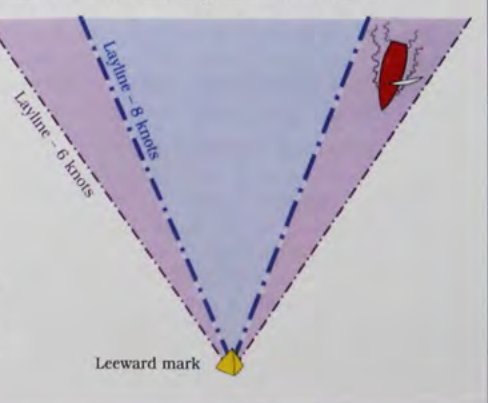
Second, changes in wind velocity have a much greater effect on your jibing angle than on your tacking angle. In the example shown below, the red boat was sailing within the laylines in six knots of wind. When the wind increased to eight knots, however, she was able to sail much lower and thus found herself overstanding the leeward mark.
2. Sail for velocity before shifts.
It’s almost always better to have more wind velocity when you’re racing, and this is especially true downwind. On runs, a puff will give you better speed through the water, and it may also let you sail quite a bit lower. Increased wind velocity usually affects your angle much more on a run than on a beat. For this reason, puffs on runs are a lot like headers because they allow you to sail lower and closer to the leeward mark. That’s why you should usually go for pressure first downwind, especially in lighter air.
3. Sail away from the next shift.
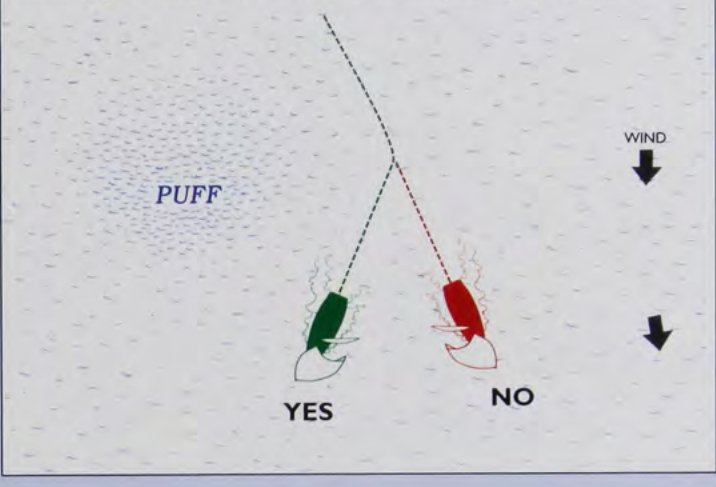
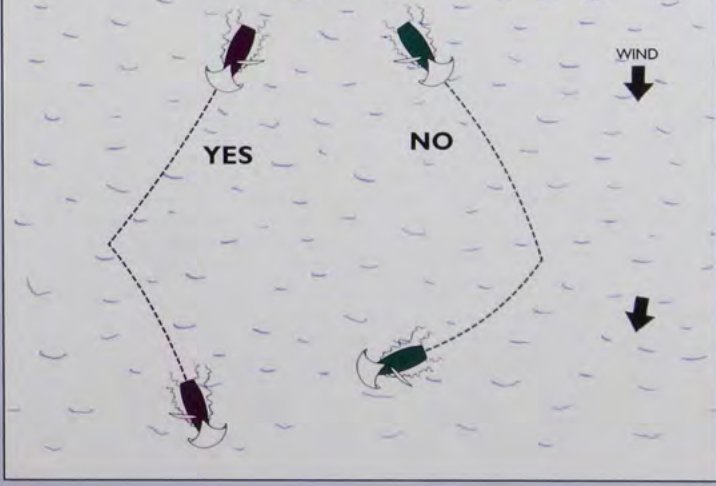
On a beat you will almost always gain if you sail toward the next windshift because when the shift comes you will be on a higher “ladder rung.” On a run, the opposite is true. You should sail away from the next shift (below) so you get to a lower ladder rung. Two times when you probably wouldn’t want to sail away from a shift are when a) that shift brings more wind pressure; or b) that shift allows you to fetch the leeward mark.
4. Jibe on the lifts.
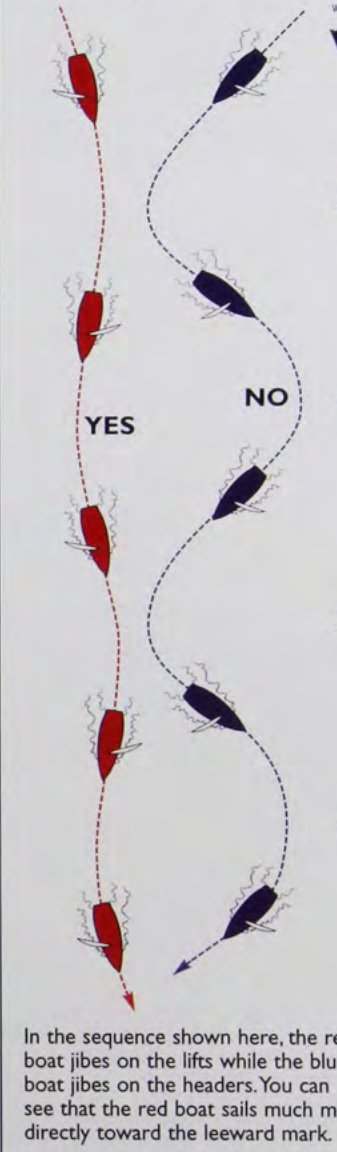
When you’re sailing upwind, you should tack on the headers so you sail on the lifts. On runs, however, you want to jibe on the lifts so you sail on the headers. By staying on the headed jibe, you can sail lower and closer to the leeward mark. Also, jibing on lifts is consistent with rule of thumb #3 because you are sailing away from the next shift.
Originally published as “Strategy – Four rules of thumb for strategy on runs” in the BDA Magazine 2005 Annual. © David Dellenbaugh / Speed & Smarts, reproduced in Dragon News by permission. Reproduced with permission.
← Back to the Technical Library